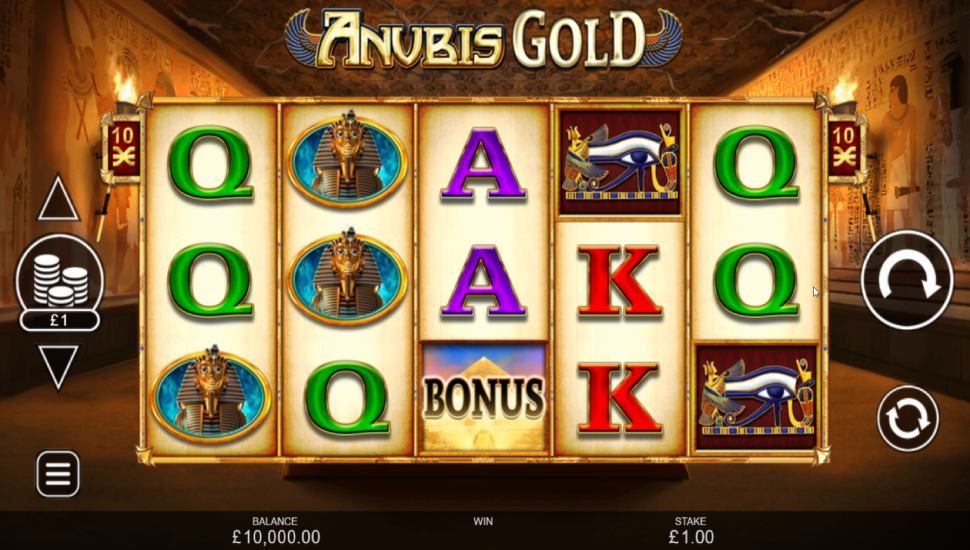
If you appreciate slot games and have ever pondered what makes a great one tick, Hand of Anubis offers a fascinating case study https://handofanubis.co.uk/. It’s far more than just one more online slot with an Egyptian theme. The journey you get playing it on a UK casino site is the result of careful, complex software engineering. This tour behind the digital curtain will reveal you the system design that makes this game work. We’ll explore the Random Number Generator that guarantees fair play, and the client-server communication that ensures a seamless session whether you’re in London, Manchester, or Edinburgh. Getting to know this architecture clarifies why the game feels so smooth and dependable, offering a top-tier gaming experience every time you hit spin.
Client-Server Model & Network Communication
The seamless Hand of Anubis experience relies on a carefully planned client-server model. When you gamble on your phone or computer in the UK, the smooth animations and symbols are rendered by the ‘client’ software in your browser or app. But the essential game logic and final outcome are processed by a secure ‘server’ in a data centre. This split is a core security and fairness feature. It prevents anyone from meddling with local game code to cheat. Each time you press spin, your client forwards a request with your bet size and game state to the server. The server uses its certified RNG, determines the result, and transmits a small data packet. This packet details the reel positions, any win amount, and flags for features like the Hold and Win bonus. The entire communication takes milliseconds over encrypted HTTPS connections. This ensures speed and security for your data, a vital concern for any online financial activity in the UK.
Data Packet Performance and Latency Considerations
Britain has good internet infrastructure, but the game’s designers still optimised for latency. The data packets transferring between client and server are very lean. They carry only essential identifiers and outcome codes, not full graphics. For example, the server doesn’t send an image of Anubis on reel three. It sends a code like “SYM05_POS3”. Your client already has all the high-quality symbol graphics and animations stored locally. It reads this code and performs the corresponding visual display. This approach lowers bandwidth use and keeps gameplay smooth even on variable 4G or public Wi-Fi across the country. The game also uses predictive loading, caching potential assets in the background based on the game state. This makes transitions into bonus rounds or complex animations extremely fast, maintaining the immersive flow that holds a player’s attention.
Session Handling and State Persistence
Session management is one more key component of this architecture. When a UK player accesses their casino account and starts Hand of Anubis, the server creates a persistent, secure session. This session monitors your credit balance, current bet level, and game history. The system is built to be resilient. If your internet connection fails mid-spin, the server has already resolved the outcome. When you reconnect, your game state synchronises, so no wins are lost. This state persistence also allows features like ‘buy bonus’ work without a hitch. The server instantly computes the cost based on the game’s math model and your session data, processes the transaction, and activates the feature. It all happens in real-time, making a browser-based game feel as responsive as a native app.
The Main Mechanism: Random Number Generation (RNG) & Integrity
The Hand of Anubis slot runs on its Random Number Generator. Consider it as the digital oracle that governs every outcome. This is a cryptographically secure pseudo-random number generator (CSPRNG). Independent testing agencies like eCOGRA or iTech Labs audit it constantly to verify its integrity. For players in the UK, this certification is the foundation of trust. It ensures every spin is independent and unpredictable, fully complying with the UK Gambling Commission’s strict rules. The RNG functions at incredible speeds, generating thousands of numbers every second even while the game sits idle. The exact number taken the instant you press spin determines if the reels show a scarab, an ankh, or Anubis. This continuous, audited process eliminates any chance of predicting patterns or manipulating results. It keeps the game’s volatility and its Return to Player (RTP) percentages mathematically transparent, which is what informed UK players expect from a regulated market.
Pseudo-Random Nature and Seed Values
The concept ‘pseudo-random’ is essential here. Software struggles to use a genuinely random natural event, like radioactive decay. Instead, developers use complex algorithms that begin with an initial ‘seed’ value. This seed is often taken from a chaotic source, such as the system time recorded in microseconds. In Hand of Anubis, the server creates this seed when a new gaming session begins. It creates a distinct, non-repeatable sequence of numbers for that entire session. This design eliminates ‘cycle hunting’ and guarantees no two players, whether in Birmingham or Bristol, witness the same sequence of outcomes. The algorithm handles the seed through a series of mathematical transformations. The result is a stream of numbers that meet every statistical test for randomness. This is why the game’s feature triggers and jackpot wins seem both thrillingly sudden and mathematically consistent over thousands of spins.
Provable Fairness and UK Player Assurance
Transparency is essential for the UK audience. The structure of Hand of Anubis often adopts a ‘provable fairness’ philosophy. Not every edition uses client-side verification, but the RNG is built to allow it. Here’s how it could function: the server produces a random seed and its hashed value before the spin. It transmits the hash to the player’s device. After the spin, the server discloses the original seed for verification. This method cryptographically demonstrates the operator could not have changed the outcome after the fact. For UK players, this level of provable integrity is important. Knowing the game carries a UKGC license and undergoes regular audits provides real peace of mind. It allows players center on appreciating the theme and gameplay, trusting the system is fair.
Statistical Model & Return to Player (RTP)
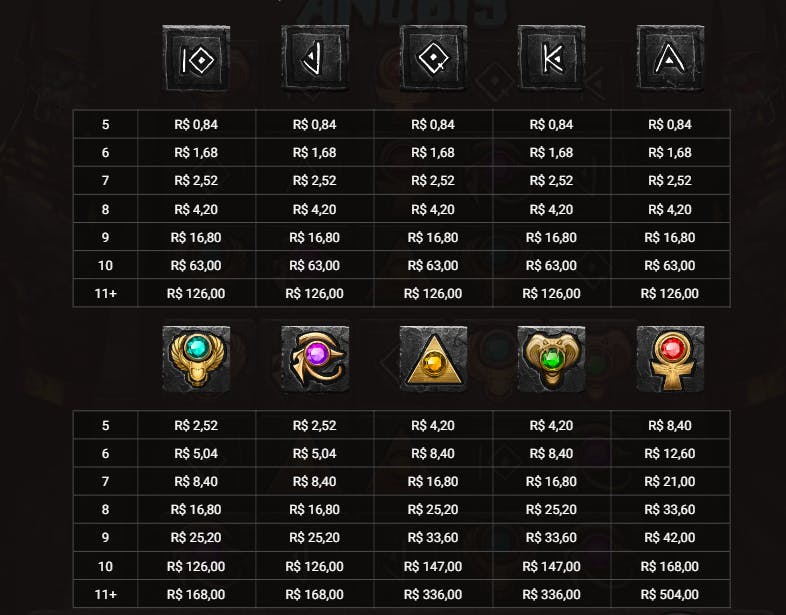
Under the pyramids and hieroglyphics sits the game’s mathematical model. This is the complex spreadsheet that determines its financial core. The model establishes the slot’s volatility, hit frequency, bonus round probability, and its Return to Player (RTP). For Hand of Anubis, the RTP is usually set around a competitive 96% or higher. This implies over millions of spins, the game is designed to return 96% of all wagered money to players. UK players should remember this is a long-term theoretical statistic, not a short-term guarantee. The model is baked into the game’s core logic, weighting the RNG outcomes. Each symbol on each virtual reel has a specific probability of landing. These probabilities are calculated to hit the target RTP and the desired volatility level. Hand of Anubis often aims for medium-high volatility, making those Hold and Win bonus triggers and potential jackpots genuinely exciting events.
Risk Level and Payout Frequency Design
This mathematical model carefully crafts the game’s volatility profile. Hand of Anubis is engineered for an adventure that can vary from low-mid to high, according to the mode. The base game might have lower volatility with frequent small wins to keep players involved. The Hold and Win bonus round is where the high volatility takes over. It presents the chance for considerable payouts, but more rarely. The hit frequency, which is how often a spin results in any win, is precisely calibrated within this model. The designers have tuned the reel strips and symbol distributions to create a rewarding rhythm of play. This deliberate balance makes the game appeal to a broad range of UK players. Some desire extended sessions with consistent action, while others seek the adrenaline of a major bonus round payout.
Special Feature Probability Algorithms
The algorithms that control feature triggers are a fascinating part of the math model. Activating the Hold and Win bonus isn’t just about landing a certain number of scatters. It involves a probability check woven into the RNG outcome for each spin. The server’s calculation determines not only the visible reel outcome but also whether that spin qualifies for a feature entry. These probabilities can be variable. In some game versions, bet size can impact them, following ‘must fall’ or ‘must hit’ protocols within a certain spin count to maintain fairness and excitement. The system ensures that while the exact trigger moment is random, the average frequency matches the published game specs. This assures the experience for a player in Cardiff or Glasgow is consistent with what the game’s math promises.
Artwork, Animation & Audio Pipeline
The immersive Egyptian atmosphere of Hand of Anubis originates from a optimized graphics and audio pipeline. The game is presumably built with HTML5 and WebGL technologies. This enables hardware-accelerated 3D rendering directly in your browser, without plugins. The detailed symbols, smooth reel spins, and striking lighting effects when Anubis expands are all processed by your device’s graphics card for smooth performance. The asset pipeline is intelligent. High-resolution textures and advanced character animations are compressed and streamed efficiently. The audio system is just as sophisticated. It manages layered soundscapes: the steady ambient desert wind, the pleasing mechanical clunk of the reels, the victorious fanfare for a win. These elements are mixed dynamically based on game events. The outcome is a film-like audio experience that doesn’t get repetitive or overwhelming during extended play sessions.
Platform-Wide Optimization for the UK Market
The United Kingdom has a varied device environment, and the game’s design incorporates powerful cross-device performance tuning. Whether you use an iPhone on the Tube, an Android tablet at home, or a Windows PC, the game client recognises your device specifications and adapts rendering parameters. It can scale texture quality, simplify particle systems, or adjust frame rate goals to ensure smooth performance. This flexible design guarantees the core experience remains intact across all devices. The excitement of the expanding symbols and the suspense of the Hold and Win round are kept seamlessly. This dedication to cross-platform efficiency caters to the UK’s mobile-first gaming movement. It delivers a uniformly premium experience whether a player is in a Leeds cafe or a Scottish living room.
The Function of Game State Machines
Orchestrating the shift from main game to bonus feature, to free spins, and back is the role of a finite state machine in the frontend code. This component specifies every possible state of the game and the valid transitions between them. When the server sends the signal that the Hold and Win bonus is triggered, the client’s state machine switches from “BASE_GAME” to “BONUS_INITIATION”. This initiates a specific sequence of animations, audio, and interface changes. This architecture ensures intricate multi-phase features unfold without issues and in the correct order. It adds a polished narrative to the playing experience. This hidden coordination is what renders the rich gameplay of Hand of Anubis appear natural and dramatic. It guides you on a personalised adventure through historic Egypt.
Regulatory adherence & UKGC Integration
For a game to be made available legally to UK players, its entire architecture must be founded on a foundation of security and regulatory compliance. Hand of Anubis runs under a UK Gambling Commission (UKGC) license. This imposes some of the strictest technical standards in the world. The game’s communication protocols are secured end-to-end using TLS 1.2 or higher. This secures all data transmissions. The server infrastructure resides in secure, audited data centres with stringent access controls. Furthermore, the architecture links with the casino platform’s age verification and anti-money laundering systems. This ensures only eligible players can participate. The game logic itself incorporates responsible gambling features mandatory in the UK. These include easily accessible reality checks, deposit limits, and time-out functions. They are displayed through the game client but are enforced at the platform level. This shows a holistic design that puts player protection first.
Fraud prevention Mechanisms and Audit Trails
The infrastructure is strengthened with multiple layers of fraud prevention and security monitoring. Every action, from a game spin to a bonus buy, is logged in unalterable audit trails on secure servers. These logs are detailed and tamper-proof. Auditors can use them to reconstruct any game session in complete detail. The client-side code is scrambled and periodically tested for authenticity to block decompilation or interference. The system also monitors for anomalous play patterns that might suggest automated bots or collusion. Such activity is less frequent in a solo slot, but the monitoring is still active. This rigorous security posture isn’t just about securing the operator. It essentially protects the player pool and secures a fair environment for all players. Such equity is a foundation of the UKGC’s supervisory approach.
Linking with Casino Platform APIs
The Hand of Anubis is not present in isolation. It integrates into larger online casino platforms through robust Application Programming Interfaces (APIs). These APIs handle critical functions. They manage depositing funds into the game wallet, withdrawing winnings, updating player loyalty points, and fetching promotional offers customized to the UK market. The game client calls these APIs seamlessly. This makes the financial and account management aspects seem like a natural part of the game flow. The integration is a tribute to modern software design. It enables a complex game from one provider to sit perfectly within the branded ecosystem of a UK casino. The result is a cohesive, secure experience that allows players focus on the fun of chasing Anubis’s treasures.
Looking closely at the architecture of the Hand of Anubis slot reveals a masterpiece of modern game design. It combines rigorous mathematics, robust software engineering, and immersive artistry. For the UK player, this exploration demonstrates why the game feels fair, performs smoothly across devices, and delivers a consistently engaging session. The system is built on certified randomness, secured by UKGC-mandated protocols, and optimised for British internet and mobile habits. From the relentless RNG generating numbers in the cloud to the efficient client rendering stunning visuals on your screen, every layer is crafted to provide reliable and thrilling entertainment. Understanding this complex machinery offers you a fresh appreciation for the technology that powers your play. It ensures every spin in the shadow of the pyramids is a secure, fair, and potentially rewarding adventure.